Focus on carbon equipment
Focus on carbon equipment


In today's era of sustainable development, the selection of raw materials for machine-made charcoal has long transcended the pursuit of calorific value, shifting towards environmental friendliness and resource recycling. Selecting the best raw materials is not only about producing high-quality products, but also about fulfilling our environmental responsibility to the planet.
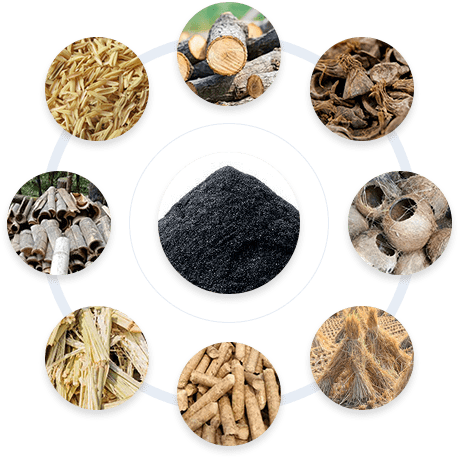
The most environmentally friendly raw materials are undoubtedly various renewable biomass wastes. Collecting scraps from wood processing plants, straw and fruit shells left over from harvested crops, and even garden prunings as core raw materials for machine-made charcoal recycles these waste resources. This practice avoids the pollution caused by natural decay or incineration, converting waste into clean energy.

This choice significantly reduces dependence on virgin forest resources. By establishing a raw material supply chain centered on agricultural and forestry waste, we eliminate the need to cut down trees for charcoal production, thereby protecting forest ecosystems, maintaining biodiversity, and making a positive contribution to addressing climate change.
In the long term, establishing a stable and clean raw material supply system is the lifeblood of the sustainable development of the machine-made charcoal industry. This creates a green closed loop throughout the entire production chain, "taking from nature and returning to society." This not only enhances the product's market competitiveness but also strengthens the industry's environmental reputation.
Thus, the best charcoal raw materials are essentially those from sustainable resources that balance economic and environmental benefits. Choosing them means choosing a cleaner, greener future.
In Southeast Asia, Africa, and South America, biomass resources are abundant, but stable and efficient processing equipment is relatively scarce. Due to its stable operation and simple maintenance, the continuous carbonization machine is gradually becomin
In the process of biomass carbonization projects moving from pilot projects to large-scale operations, equipment selection plays a decisive role. Continuous carbonization machines, with their continuous production capabilities and scalability, have become
The Malaysia EFB Pellet Carbonization Project has officially entered the production stage, delivering a stable processing capacity of 2 tons per hour. The project aims to provide a professional solution for the conversion of EFB pellets into biomass charc
Empty fruit bunches (EFB) have a high fiber content and large volume, making traditional processing methods often inefficient. The EFB continuous carbonization equipment solves this problem through continuous operation, enabling the efficient processing o