Focus on carbon equipment
Focus on carbon equipment


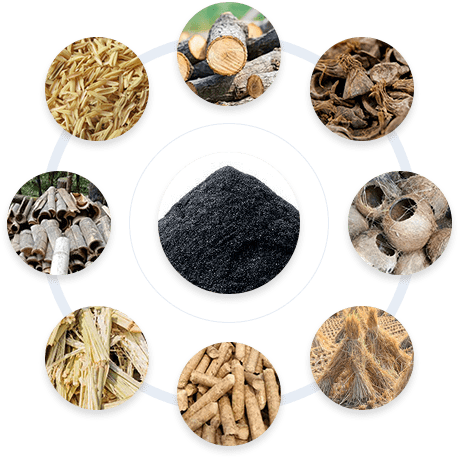
The carbonization process in a horizontal carbonization furnace is a dynamic and orderly sequence of chemical transformations. It's not simply combustion; rather, it uses heat energy to induce fundamental chemical changes in the material under airtight conditions, ultimately producing pure biochar.

This process can generally be divided into three distinct stages. First, the drying stage utilizes waste heat to evaporate the physical moisture in the material. This is followed by the core pyrolysis carbonization stage, where organic components such as wood fiber in the material undergo decomposition at moderate to high temperatures, releasing volatile substances. Finally, the high-temperature calcination stage further purifies the fixed carbon and enhances the structure and properties of the carbon.
The advantages of a horizontal carbonization furnace are fully demonstrated in this process. The horizontal furnace structure, combined with the conveying system, ensures that each batch of material undergoes the same thermal treatment path and duration, resulting in a product of uniform quality. Precise temperature control within the furnace ensures that each reaction stage proceeds under optimal conditions.
Thus, the carbonization process in a horizontal carbonization furnace is a highly controllable and efficient conversion process line. Through precise control of temperature, time and environment, it successfully converts waste biomass into high-value green products, demonstrating the powerful potential of modern technology in the field of resource recycling.
In Southeast Asia, Africa, and South America, biomass resources are abundant, but stable and efficient processing equipment is relatively scarce. Due to its stable operation and simple maintenance, the continuous carbonization machine is gradually becomin
In the process of biomass carbonization projects moving from pilot projects to large-scale operations, equipment selection plays a decisive role. Continuous carbonization machines, with their continuous production capabilities and scalability, have become
The Malaysia EFB Pellet Carbonization Project has officially entered the production stage, delivering a stable processing capacity of 2 tons per hour. The project aims to provide a professional solution for the conversion of EFB pellets into biomass charc
Empty fruit bunches (EFB) have a high fiber content and large volume, making traditional processing methods often inefficient. The EFB continuous carbonization equipment solves this problem through continuous operation, enabling the efficient processing o