Focus on carbon equipment
Focus on carbon equipment


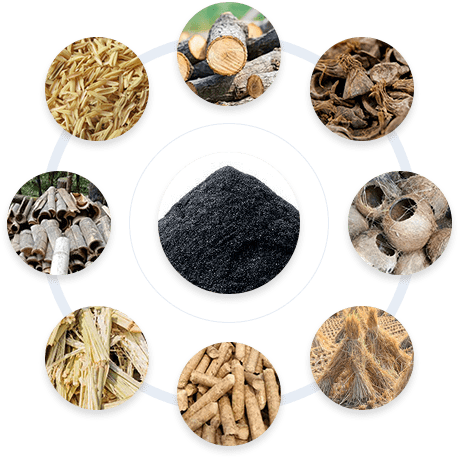
The ultimate goal of producing biochar from EFB fiber is to obtain high-quality biochar products with market competitiveness. The role of the carbonization machine in this process is to maximize the added value of the product through precise process control, achieving a value leap from waste to commodity.

The controllability of the carbonization process is the core factor determining biochar quality. By precisely adjusting the heating rate, final carbonization temperature, and material residence time, key indicators such as fixed carbon content, volatile matter, and ash content of the biochar product can be specifically affected. This allows producers to flexibly adjust the process according to different market demands, producing specific specifications of biochar suitable for industrial fuel, soil amendment, or deep processing raw materials.
Furthermore, the carbonization machine makes significant contributions to environmental benefits and product purity. Its closed system effectively isolates external impurities, avoiding the ash introduction and pollution common in traditional earthen kiln carbonization. Simultaneously, the system's effective treatment of harmful fumes ensures the cleanliness and safety of the produced biochar, laying the foundation for its entry into high-end application markets.
In conclusion, carbonization machines are key tools for realizing the high-value utilization of EFB fibers. They transform biomass that might otherwise be discarded or inefficiently incinerated into stable, clean, and high-energy solid fuels or chemical feedstocks, not only creating direct economic returns but also extending the agricultural industry chain and providing a practical technological path for sustainable development.
In Southeast Asia, Africa, and South America, biomass resources are abundant, but stable and efficient processing equipment is relatively scarce. Due to its stable operation and simple maintenance, the continuous carbonization machine is gradually becomin
In the process of biomass carbonization projects moving from pilot projects to large-scale operations, equipment selection plays a decisive role. Continuous carbonization machines, with their continuous production capabilities and scalability, have become
The Malaysia EFB Pellet Carbonization Project has officially entered the production stage, delivering a stable processing capacity of 2 tons per hour. The project aims to provide a professional solution for the conversion of EFB pellets into biomass charc
Empty fruit bunches (EFB) have a high fiber content and large volume, making traditional processing methods often inefficient. The EFB continuous carbonization equipment solves this problem through continuous operation, enabling the efficient processing o