Focus on carbon equipment
Focus on carbon equipment


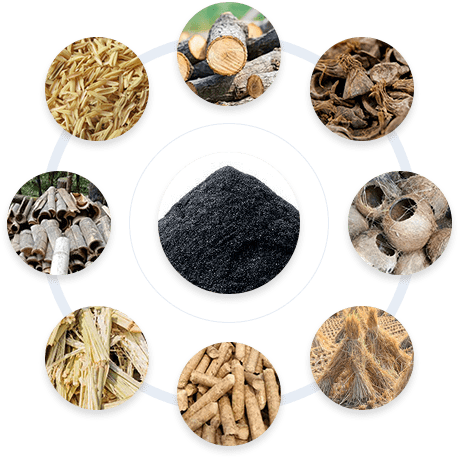
Cocoa pods are a by-product of cocoa bean production. Direct discarding not only wastes resources but also causes environmental pollution. Dingli cocoa pod carbonization machine can help cocoa pods to be reused and increase their economic value.

Cocoa pod carbonization machine is a continuous smokeless carbonization equipment. Carbonizable cocoa pods are used as boiler fuel. How does the cocoa pod carbonizer work?
The process of making charcoal from cocoa pods usually involves several steps and requires specialized equipment. However, it's a relatively simple and cost-effective way to produce charcoal while reducing waste and environmental impact.
Drying: Use a dryer or spread them out in the sun to dry the cocoa pods. Remove excess moisture.
Carbonization: After the shells are dry, they are carbonized using a carbonization furnace. During this process, the shell is heated in the absence of oxygen, which produces biochar and other gases.
Output: The carbonized biochar leaves the kiln for cooling. Gases produced during the carbonization process are also collected and processed.
Dust removal: The exhaust gas is then passed through a dust removal system to remove any impurities.
Gas Recovery: The gas produced during the carbonization process is often used as a fuel source.
Zhengzhou Dingli Group is a professional carbonization machine manufacturer. A design team with 18+ experience, if you want to know more details about carbonization equipment, please leave a message for consultation.
In Southeast Asia, Africa, and South America, biomass resources are abundant, but stable and efficient processing equipment is relatively scarce. Due to its stable operation and simple maintenance, the continuous carbonization machine is gradually becomin
In the process of biomass carbonization projects moving from pilot projects to large-scale operations, equipment selection plays a decisive role. Continuous carbonization machines, with their continuous production capabilities and scalability, have become
The Malaysia EFB Pellet Carbonization Project has officially entered the production stage, delivering a stable processing capacity of 2 tons per hour. The project aims to provide a professional solution for the conversion of EFB pellets into biomass charc
Empty fruit bunches (EFB) have a high fiber content and large volume, making traditional processing methods often inefficient. The EFB continuous carbonization equipment solves this problem through continuous operation, enabling the efficient processing o